
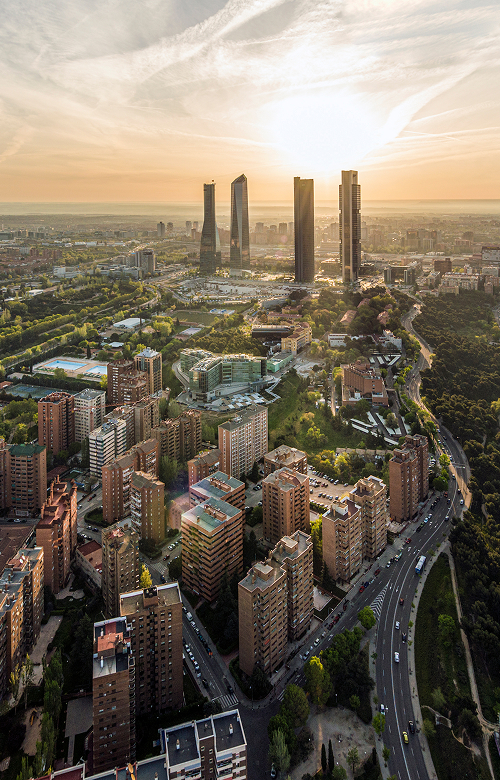



Aug. 19, 2026
Studying in Madrid: A Complete Guide for New Residents
Studying in Madrid: A Guide for New Students
You’ve been accepted to a university in Madrid, and now you have twenty tabs open: subway maps, Reddit forums about neighborhoods, and apartment listings that don’t match the photos. It’s normal. Madrid is big; it has more universities than any brochure can properly summarize, and every neighborhood is going to try to sell you on its version of “this is where you have to live.”
This guide doesn't repeat what you've already read a thousand times. It gives you the complete picture—universities, neighborhoods, transportation, budget, and leisure activities—and directs you to resources where you can dig deeper into each topic. To study in Madrid the smart way, you don't need to know everything on the first day. You just need to know where to start.
A Map of Universities in Madrid: No Rankings, No Filler
Madrid has one of the highest concentrations of universities in Spain. The long list is a little daunting, so let's take it one step at a time.
Public, which have the largest student enrollment:
- Complutense University of Madrid (UCM), with its historic headquarters on the Ciudad Universitaria campus in Moncloa. It is the largest university in the country and offers programs in nearly every field.
- Polytechnic University of Madrid (UPM), spread across several campuses (Ciudad Universitaria, Moncloa, Vallecas), specializing in engineering and architecture.
- Autonomous University of Madrid (UAM), on the Cantoblanco campus, north of the city. One of Madrid’s most self-contained campuses: a library, academic departments, student housing, and green spaces all within the same grounds.
- Rey Juan Carlos University (URJC), with campuses in Vicálvaro, Móstoles, Fuenlabrada, and Alcorcón.
- Carlos III University of Madrid (UC3M), in Getafe, Leganés, and Colmenarejo.
- University of Alcalá (UAH), located a bit further from downtown, in Alcalá de Henares.
Private, which carry more weight than is sometimes given to them:
- Comillas Pontifical University (ICADE, ICAI), located in the city center, with a strong focus on law, business, and engineering.
- Francisco de Vitoria University, in Pozuelo de Alarcón, with its own spacious “university town”-style campus.
- CEU San Pablo, with several campuses, including one in Montepríncipe.
- European University, with campuses in Villaviciosa de Odón and downtown.
- IE University, with a strong presence in central Madrid.
- Nebrija University and Camilo José Cela University, with smaller campuses and more specialized programs.
You don't need to memorize the list. What you do need to be clear about is where your campus is located, because that determines almost all the decisions that follow: neighborhood, transportation, and type of housing.
Ciudad Universitaria and the Rest of the Map: Neighborhoods Based on Your Campus
Ciudad Universitaria and the Rest of the Map: Neighborhoods Based on Your Campus
“Ciudad Universitaria” isn’t just any neighborhood: it’s Madrid’s largest university campus, located in Moncloa, where the Complutense and Polytechnic universities share the same grounds. If you study there, living nearby cuts your commute down to a ten- or fifteen-minute walk—which is a real plus during exam season.
But Madrid doesn't begin and end at Moncloa. If you go to UAM, Cantoblanco makes sense in its own right: it’s compact, has good commuter train connections, and has a different pace than downtown. If you go to URJC, Vicálvaro offers more reasonable prices and direct transportation. And if you go to Francisco de Vitoria University or a similar school, Pozuelo offers a more residential feel, with less noise and good connections to downtown.
Choosing a neighborhood isn't just a matter of proximity to campus: the kind of lifestyle you want to lead, your budget, and how much you prioritize daily commuting also come into play. If you want a complete breakdown of which neighborhoods suit each student profile, we have a guide dedicated solely to that: The Best Neighborhoods in Madrid for Students. Here we’ll stick to the general map; there you’ll find the neighborhood-by-neighborhood breakdown.
Getting Around Madrid: Metro, Cercanías, and the Youth Pass
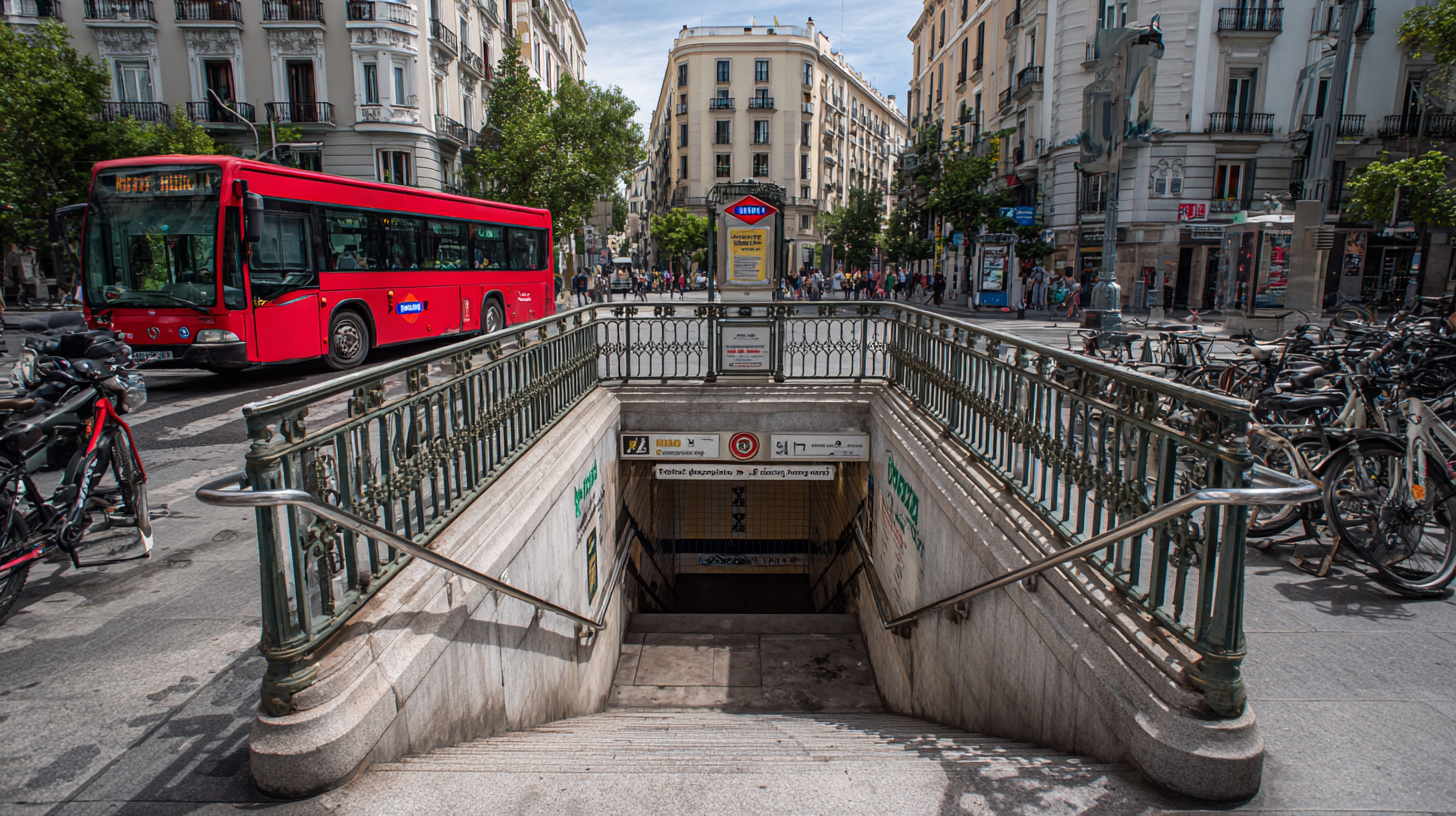
Madrid has one of the most extensive public transit networks in Europe, which is a blessing when your college is twelve metro stops away from where you live. The metro, Cercanías (essential if your campus is in Getafe, Alcalá, or Leganés), and EMT buses cover virtually any route within the Community of Madrid.
The game-changer for any student is the Madrid Youth Pass: unlimited travel across the entire network, with a price designed for people under 26, no matter how many zones you cross each day. Whether you live in Cantoblanco and have classes downtown, or if you live in Vicálvaro and are meeting up in Malasaña on a Thursday, the pass pays for itself just with your daily commute.
The application process has its own procedures, deadlines, and certain requirements that you should be aware of before applying. We explain it in detail, step by step, in how to apply for the youth transit pass in Madrid.
How much does it cost to live in Madrid? (Approximate estimate, no specific figures)
This is where you read the most about everything, yet find the least clarity. Living in Madrid as a student involves several expenses: housing, transportation, food, entertainment, and those costs that don't show up on any spreadsheet until you've already paid them.
We’re not going to give you a specific figure here, because it depends too much on your lifestyle, the area, and the type of housing you choose. What we do have is a detailed guide that breaks down each expense category month by month, so you can put together your own realistic budget before you arrive. Check out the StepHouse blog whenever you want to get into the financial details; here, we’ll stick to the big picture.
What is useful to know right away: costs vary much more by neighborhood and type of housing than by “living in Madrid” in general. Cantoblanco and Vicálvaro are usually cheaper than downtown; Pozuelo and Plaza de España tend to be more expensive. And within each neighborhood, housing in a residence hall usually comes with fewer last-minute surprises than a shared apartment, because the price already includes utilities, Wi-Fi, and maintenance.
Leisure, culture, and free activities
Studying in Madrid isn't just about going to class and coming home. The city has museums with free admission during certain hours, huge parks where you can unwind between exams, markets, neighborhood movie theaters, and a cultural life that doesn't require spending a lot to enjoy.
If you've just arrived and aren't yet familiar with activities that won't break the bank, we have a comprehensive guide with free things to do all over the city: Free Things to Do in Madrid: What to See and Do Without Spending Money. It’s one of the things you’ll be most grateful for during your first month, when you’re still figuring out how much you can afford to spend on going out.

Dorm or shared apartment: Which Is a Better Fit in Madrid?
This is the decision that really shapes your first year. A shared apartment in Madrid sounds good on paper: more space, seemingly cheaper, more freedom. The reality is a bit more nuanced.
Looking for an apartment from another city (or another country) without knowing the areas well is a leap of faith. Viewings you can’t do in person, security deposits you have to pay up front without clear guarantees, roommates you choose almost blindly, and leases you have to scrutinize carefully. All of this is manageable, but it takes time and energy—both of which are in short supply in September.
A residence solves several of those issues at once: a clear lease from day one, utilities and Wi-Fi included, cleaning of common areas, security, and people in the same situation as you just a few meters from your door. You don’t have to set up a home from scratch or negotiate with strangers over who pays the electricity bill.
It's not that living in a shared apartment is a bad thing. It's just that, for your first year in a city you don't know yet, having fewer variables to deal with usually means less stress come October.
StepHouse Residences in Madrid, by Campus
If the map of universities and neighborhoods has already given you a sense of where you'll be spending your time, this is exactly what you need to look at next.
StepHouse has four residences in Madrid, each designed to fit a different area and type of campus:
- StepHouse Plaza de España; right in the heart of the city, for those who want to have the city within walking distance and not have to rely so much on public transportation for their social life.
- StepHouse Pozuelo:, for students at universities in western Madrid, offering a quieter setting with excellent transportation links.
- StepHouse Vicálvaro:, near URJC, with good access to downtown whenever you feel like getting out and about.
- StepHouse Cantoblanco, practically right next to the UAM campus, for those who prefer to keep their commute between home and class to a minimum.
See which one is closest to your college, check availability, and reserve a spot before the one you're interested in fills up. In Madrid, spots near the most popular campuses fill up faster than you might think.
Frequently Asked Questions
Is it better to live near downtown or near my campus in Madrid?
It depends on how much you value your daily commute versus your social life. Living near campus saves you time every day; living near downtown gives you more leisure options nearby, but means longer commutes to class.
Does the Madrid Youth Pass cover the entire Community of Madrid?
Yes, it covers the entire public transit network of the Community, including areas with university campuses such as Getafe, Alcalá de Henares, and Alcorcón.
Is it more expensive to live in Madrid than in other Spanish college towns?
Generally speaking, yes, although it varies greatly depending on the area and the type of accommodation. The city center and areas like Pozuelo or Plaza de España tend to be more expensive than areas like Vicálvaro or Cantoblanco.
Do I need to live near a commuter train station if my university is outside of Madrid?
Yes, if your campus is in Getafe, Leganés, Alcalá, or Alcorcón, the Cercanías train is usually the fastest and most reliable way to get there—better than relying solely on the bus.
Related publications
Would you like to read more?



Request information
Take a step toward
your new adventure
your new adventure