



Aug. 28, 2026
The Costa Brava from Girona: Beaches by Train or Bus
The Costa Brava from Girona: A Beach Guide for Students
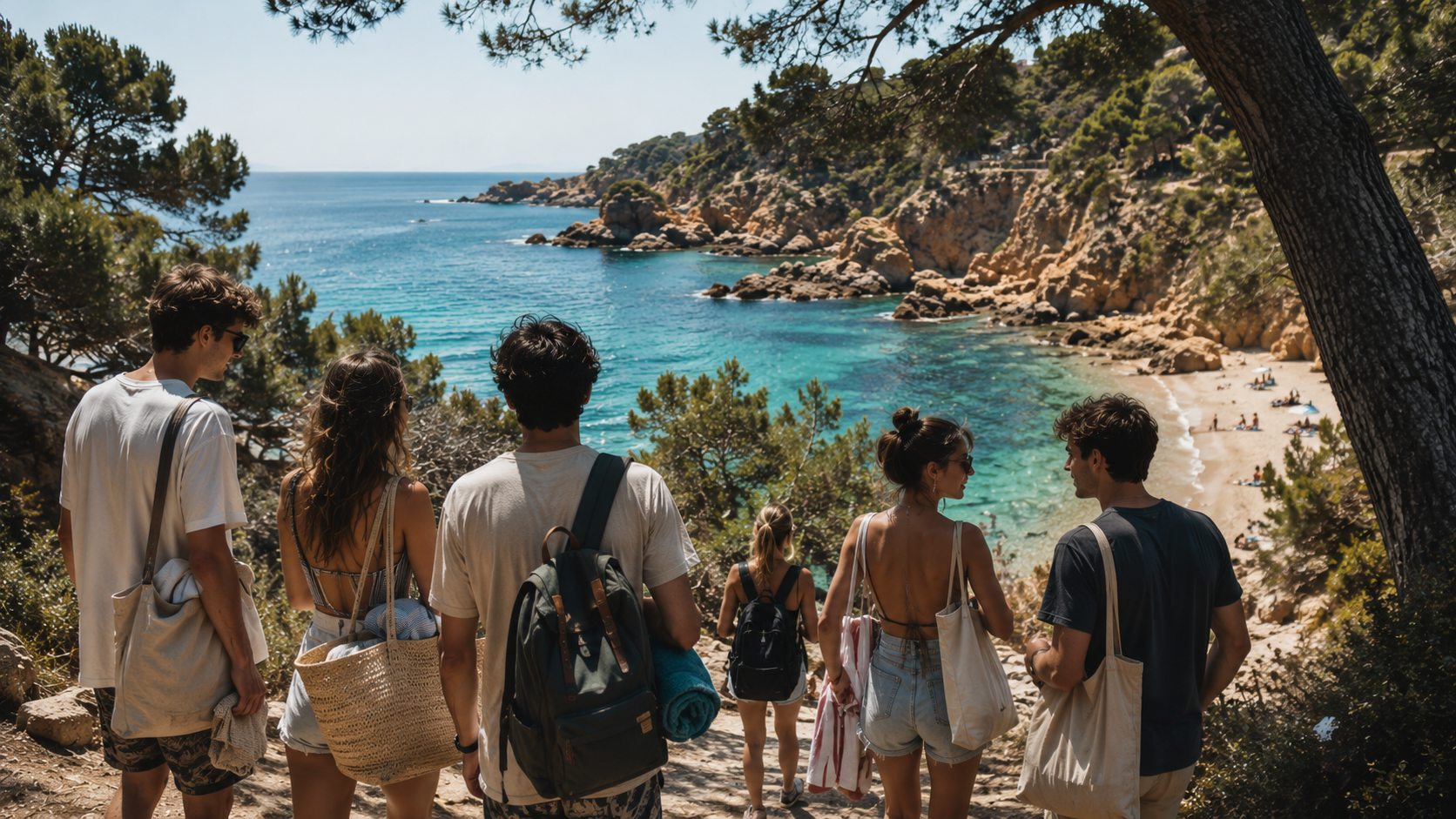
It’s a quarter past nine in the morning in August; the heat is already intense on La Rambla, and you have the day off because July and exams are behind you. You don’t have a car. You don’t need one, either: from Girona, half the Costa Brava is just a train or bus ride away. Cadaqués, Tossa de Mar, coves with names that are hard to pronounce on the first try, and beaches big enough to fit half your class—you can do it all in a day, round trip, without having to depend on whoever has a free seat in their car that weekend. That’s what this guide is all about: which beach suits you best depending on your plans, how to get there without wasting the morning at the wrong stop, and how much the whole day will cost if you’re studying in Girona this academic year and plan to take this trip more than once.
Why You Should Explore the Costa Brava from Girona Without a Car
The city of Girona has an advantage that isn’t always mentioned: it’s just a short distance from almost the entire Girona coastline, and the bus network (Moventis, formerly Sarfa) covers almost all the destinations you’d be interested in during the summer, with additional buses and more frequent service than during the rest of the year. The Renfe train covers the Girona-Figueres route in no time, and from there, there’s a connecting bus to the northern coast. For the southern coast (Tossa, Lloret, Platja d’Aro), the bus is the direct option, with no train involved.
That said, here’s a serious warning: in August, the schedules change, service is increased on certain lines, and some stops are relocated due to construction or tourist traffic. Don’t rely on a schedule you find online that was posted in March. Check the Renfe app or website for trains and the Moventis app or website for buses on the very day you’re traveling—or the afternoon before at the latest. Ten minutes spent checking the actual schedule will save you an hour of waiting at a bus stop with no shade.
Which beach is right for you, depending on what you're looking for
Not all of Girona's beaches are the same, and the Costa Brava rewards those who choose wisely before getting on the bus.
If you're looking for a quiet cove, without the loudspeakers from the beach bar
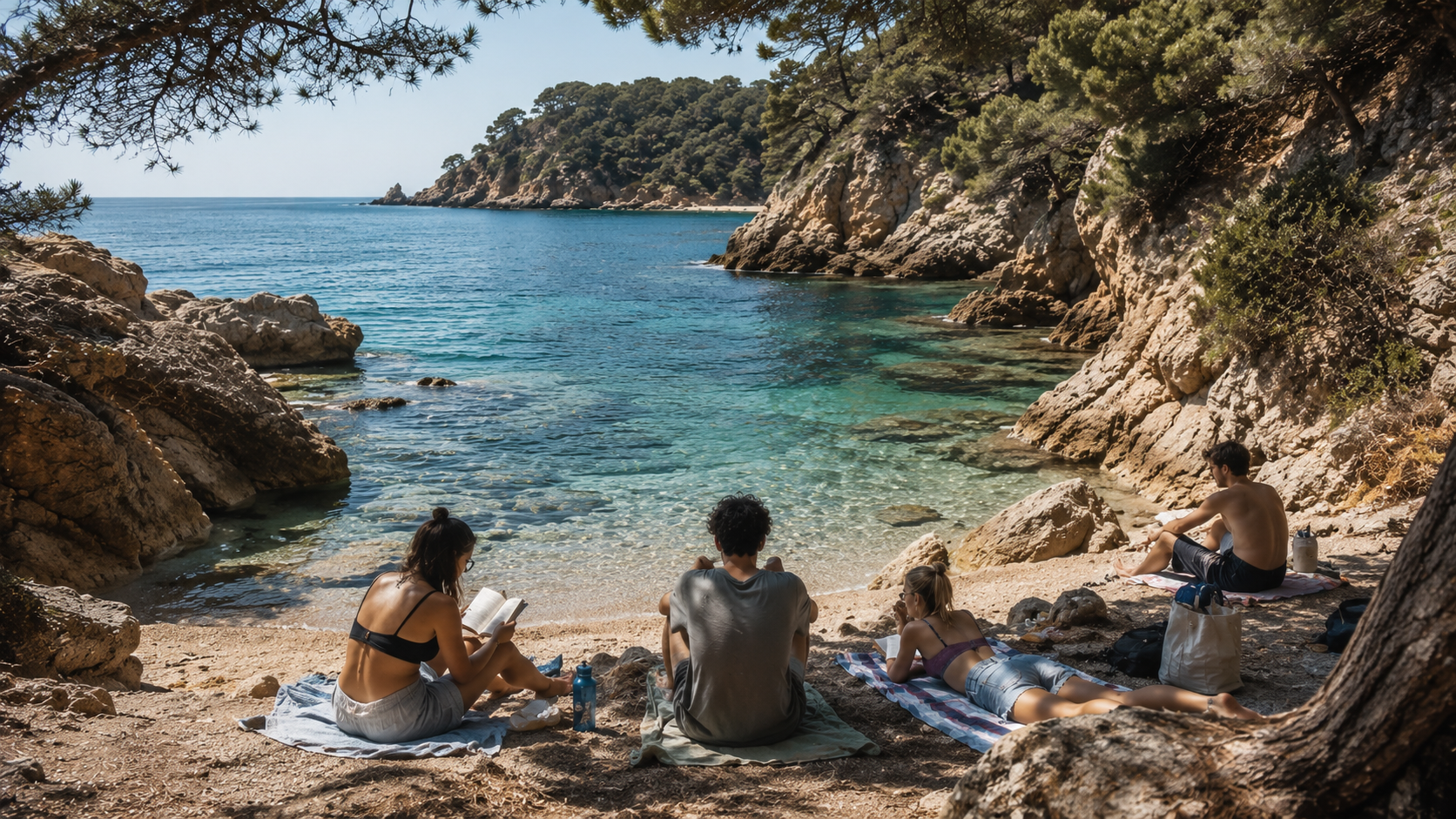
The Begur area (Aiguablava, Sa Tuna, Aiguafreda) has crystal-clear water, not much sand, and lots of rocks—and it’s more of a “towel and book” kind of place than a “loudspeakers” kind of place. These are small coves: if you arrive mid-morning during peak season, they’re already packed. Going there first thing in the morning changes the whole experience.
If you're looking for wind or waves
Roses Bay, along with Empuriabrava and Sant Pere Pescador, is a popular spot for sailing and windsurfing: a long, sandy beach that’s shallow at the water’s edge, with winds that usually pick up in the mid-afternoon. If you’ve never tried windsurfing before, there are schools here that rent equipment by the hour.
If you're looking for a lively atmosphere and a terrace that stays open late
Lloret de Mar and Platja d’Aro are the places to go when your plans include friends, music, and a late dinner. They’re also the destinations with the most frequent bus service from Girona, so they’re a good fallback option when the other routes are less reliable.
Cadaqués: A Full Day Well Spent
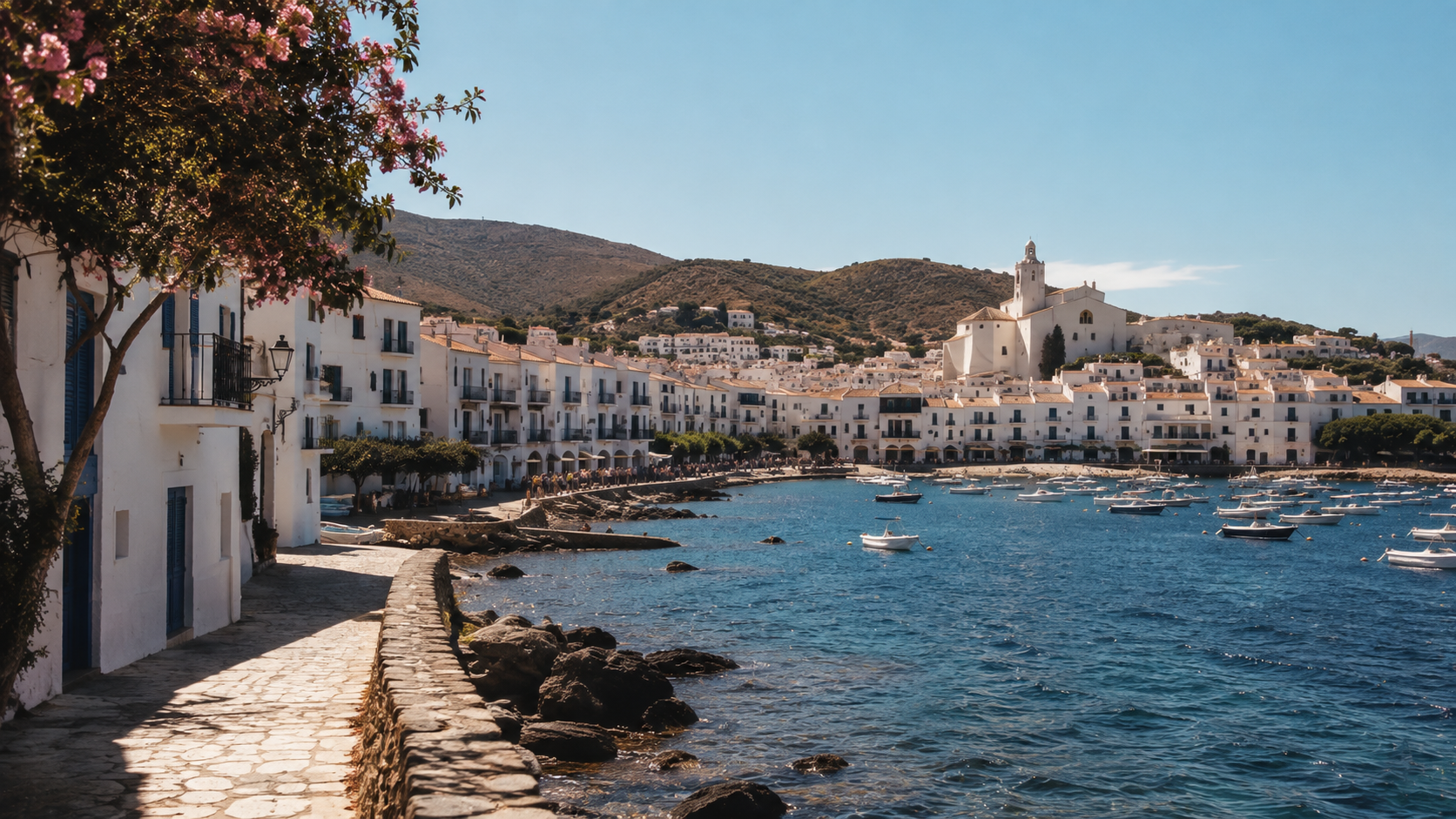
Cadaqués is white, steep, and filled with traces of Dalí around every corner—and it deserves a whole day, not just a rushed afternoon.
You can reach the town by direct bus from Girona during the summer, or by taking the Girona-Figueres train and then the Figueres-Cadaqués bus if the direct bus doesn't fit your schedule. Always check the options and exact times on Moventis before leaving home: in August, the frequency changes from week to week.
A realistic day plan: a morning swim at Platja Gran or Es Poal, a walk to Portlligat to visit the Salvador Dalí House-Museum (book your ticket online in advance—they sell out in August), a simple lunch away from the boardwalk (because there, a sandwich costs as much as a full meal), and an afternoon at a smaller cove like Cala Jugadora before heading back. If you have a second day to spare in the summer, Figueres, home to the Dalí Theater-Museum, is the other half of the Dalí route, and it’s on the way by train.
Tossa de Mar: The Classic August Getaway
Tossa has the Vila Vella, the medieval wall that overlooks the sea, and that alone sets it apart from any other town along the coast. Platja Gran, right below it, is the central beach and the easiest option if you’re not planning too much in advance.
It’s one of the most direct routes from Girona: a bus with no transfers and a short ride along the coast. Precisely because it’s so convenient, the midday buses fill up quickly in August: if you can leave first thing in the morning, do so. If you’d rather escape the crowds in the city center for a bit, the Camí de Ronda trail toward Llorell or Cala Pola will take you away from the hustle and bustle in a twenty-minute walk.
How much are you going to spend (and what to pack in your backpack)?
As a rough guide, not a fixed price: a round-trip bus or train ticket usually ranges from about 10–20 €, depending on the destination; admission to a Dalí museum is around 14–16 € (check the official website for the current price before you go); and eating sensibly off the boardwalk can cost you between 10–15 €. A full day, even allowing for some leeway, comes out cheaper than a long-distance train ticket and significantly cheaper than renting a car for one or two days.
For your backpack: a towel, plenty of water (since there isn’t always a water fountain at the small coves), sunscreen, some cash (since some beach bars in the coves still don’t have card readers), and your cell phone charger—your phone’s battery drains faster than you think when you’re taking pictures at the beach.
Back to the Routine: From the Sand to the Library
There comes a time when school starts again and your summer tan can’t hold up against the first day of class. A getaway to the coast is fine as an occasional pick-me-up, but it’s best to save your energy for September: there’s no need to go from beach to beach every weekend if that means showing up to class with less sleep than you need.
If you're wondering how to get organized during your first year in the city, the survival guide for your first year in Girona covers exactly that transition. And if you want to alternate between the coast and activities right in the city itself, without taking a bus or train, the article on things to see in Girona as a student has afternoon activities that don’t depend on the beach.
She lives in Girona, where the coast is just a train ride away—not an excuse
Studying in Girona has this particular advantage: the Costa Brava isn't a weekend trip you have to plan a month in advance—it's just a free afternoon and a bus ticket. At the StepHouse Girona residence , the station is just a short walk away, there are people to plan your next getaway with without having to rely on anyone having a car, and a room where you can leave your wet towel without anyone complaining. Reserve your spot for the semester and put together your own beach itinerary before classes start.
Frequently Asked Questions
Is it possible to get from Girona to Cadaqués without a car?
Yes. There's a direct bus during the summer season, and you can also take the Girona-Figueres train and then the Figueres-Cadaqués bus. Check the daily schedule on Moventis and Renfe before you leave, because it varies in August.
How long does it take to get from Girona to Tossa de Mar by bus?
It's one of the most direct routes along the coast, with no transfers. The exact travel time depends on the schedule and August traffic, so always check the Moventis app for that day's route.
What are the closest beaches to the city of Girona?
The Platja d'Aro and Sant Feliu de Guíxols area is usually one of the quickest to reach by bus from Girona, followed by Lloret de Mar. The trip to Begur or Cadaqués takes a little longer.
Related publications
Would you like to read more?



Request information
Take a step toward
your new adventure
your new adventure