



July 21, 2026
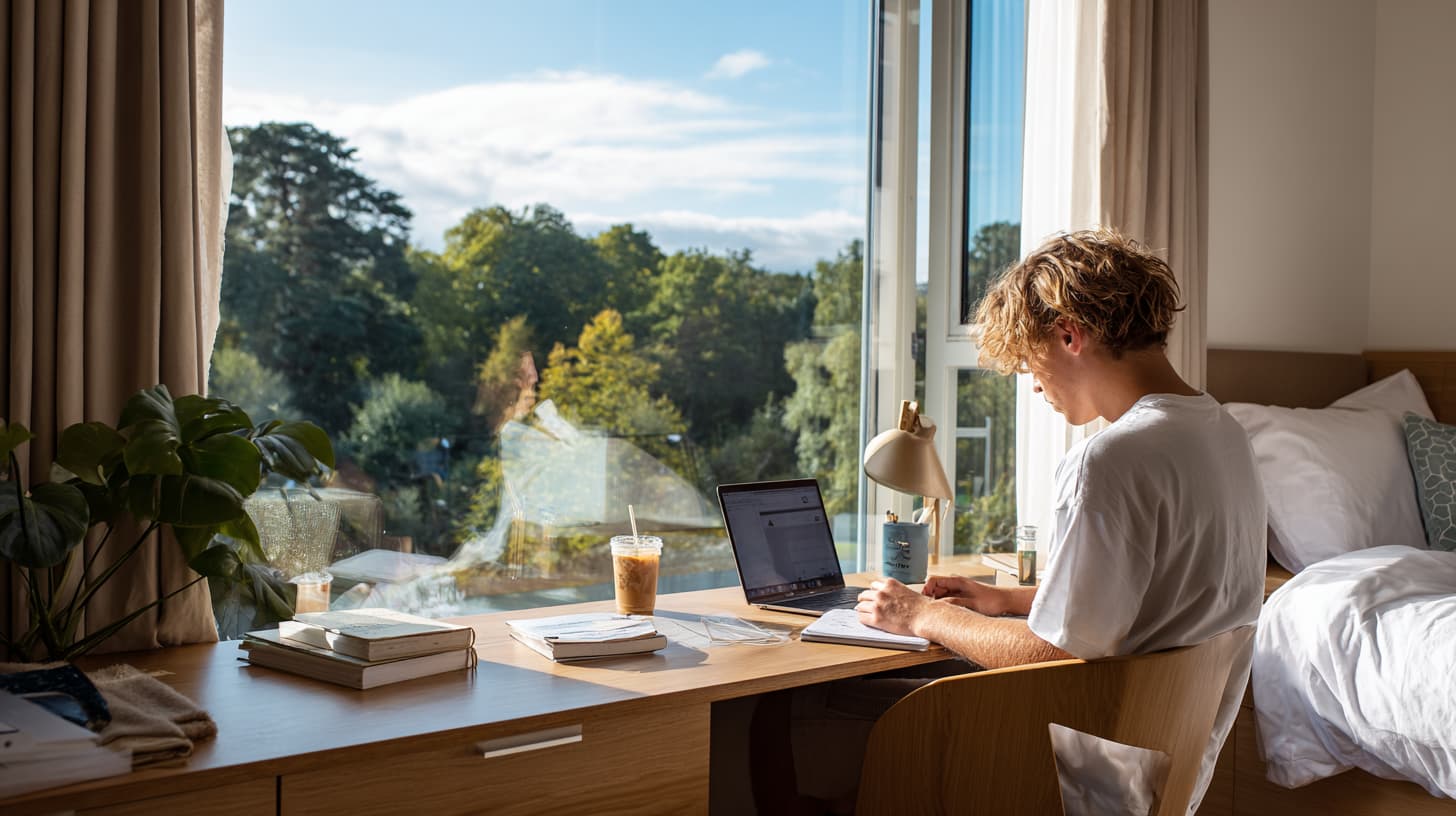
How to Study During the Summer from Your College Dorm
Studying in the summer, sure… but in a different way
Studying in July and August isn't easy.
- It's hot
- There is less external pressure
- And it's hard to stick to a routine
But there's also a positive side to it:
PYou can study better if you know how to stay organized
And living in a college dorm can be a big advantage.
Who Studies During the Summer? Real-Life Profiles
Not all students disappear over the summer.
Common cases:
- Students with make-up exams
- Summer Internships
- International Students (Incoming Erasmus Students)
- Preparation for civil service exams or courses
If this is your situation, you're not alone.
In fact, many residences are still active at this time of year, as is the case at Stephouse.

1. Benefits of Studying at a Summer Residence
Here's where it gets interesting.
While other places are becoming chaotic…the residence becomes peaceful.
Key benefits:
- Less noise
- Study rooms that are almost empty
- Higher concentration
- Available spaces without overcrowding
Now is the perfect time to move forward.
In residences such as Stephouse, these months are a great time to make the most of the common areas.
2. Recommended Daily Routine
In the summer, you need structure—but it needs to be flexible.
Example routine:
Morning (high concentration)
- 9:00 – 11:00 → in-depth study
- 11:00 – 11:30 → break
- 11:30 a.m. – 1:00 p.m. → review
Afternoon (light)
- 4:30 p.m. – 6:00 p.m. → hands-on exercises
- 6:00 p.m. → exercise or relaxation
Key: Study when it's cooler and take breaks without feeling guilty.
3. Tips for Studying More Effectively in the Summer
Concentration changes at this time of year.
Recommended techniques:
- Pomodoro Technique (short blocks)
- Active study (summaries, outlines)
- Change locations (room → common area)
Avoid long sessions without breaks.
In environments such as Stephouse, you can switch up your workspaces to stay motivated.

4. Adapting to the Heat
Heat directly affects performance.
Tips:
- Study in air-conditioned spaces
- Stay hydrated at all times
- Avoid peak hours
It's not a lack of discipline… it's physiology.
5. Avoid isolation
One of the risks of summer is disconnecting too much.
Fewer people = less interaction
But that doesn't mean you should isolate yourself.
What to do:
- Share a study space with other students
- Participate in activities
- Maintain a social life
You can view accommodation options here: Short-term stays for the summer
In residences such as Stephouse, community life usually continues even in the summer.
6. Summer Residency vs. Other Options
Why not study at home or in an apartment?
Address:
- Designated Areas
- Fewer distractions
- An Easier Routine
- Private pool
Home:
- More interruptions
- Less structure
Floor:
- Heat, noise, or disorganization
LA residence usually offers the best balance.
If you're doing an internship, you can find out more here: Accommodations for Summer Internships

FAQs: Studying in the Summer
Is it a good idea to study during the summer?
Yes, if you have clear goals and a tailored routine.
How many hours should I study?
Between 3 and 5 actual hours are usually sufficient.
How can you stay motivated?
With small goals and well-managed breaks.
Where's the best place to study in the summer?
In quiet, cool places free from distractions (such as a residence).
Studying during the summer doesn't have to be a constant struggle.
It could be an opportunity.
Less noise, more peace and quiet, and greater control over your time.
If you choose the right environment, such as a Stephouse, you’ll have everything going for you:
– ample space
– tpeace and quiet
– community
Because in the end… it’s not about studying more, but about studying better.
Related publications
Would you like to read more?



Request information
Take a step toward
your new adventure
your new adventure