


Aug. 20, 2026
Málaga Fair 2026: A Guide for Students and Residents
Málaga Fair: A Guide for Students Living in the City
You arrive in Málaga in mid-August, and the city no longer smells like the beach—it smells like churros, sand, and the gunpowder from the first firecrackers. If you live in a student residence in Málaga, the fair isn’t something you just watch go by on your phone—it literally keeps you at home, with the noise from the street coming in through the window until the wee hours.
This guide gets straight to the point for those who live here year-round—not for those who are just visiting for three days: when the Málaga Fair takes place, how to get around from Teatinos, what makes the day different from the night, how to stay safe in the heat, and how to make it through to September without having to worry about the exam.
What is the Málaga Fair, and when will it be held in 2026?
The festival commemorates the arrival of the Catholic Monarchs in the city in 1487 and has been held every August since then. The exact date varies slightly each year, but the timeframe is always the same: mid-August, with the opening speech kicking off the festivities and a full week of celebrations taking place throughout the historic center and the festival grounds.
If you live in a residence hall, this has a direct impact: the city’s pace changes during those days. Store hours, public transportation schedules, and even neighborhood routines are reorganized around the festival. It’s worth checking the City Council’s official program as soon as it’s published, because that’s where the confirmed dates for the year are listed.
Day vs. Night: Two Different Fairs in the Same City
Here's the first mistake made by anyone experiencing their first fair in Málaga: thinking it's just one thing. There are actually two, each with its own crowd, pace, and even attire.
The daytime fair, downtown
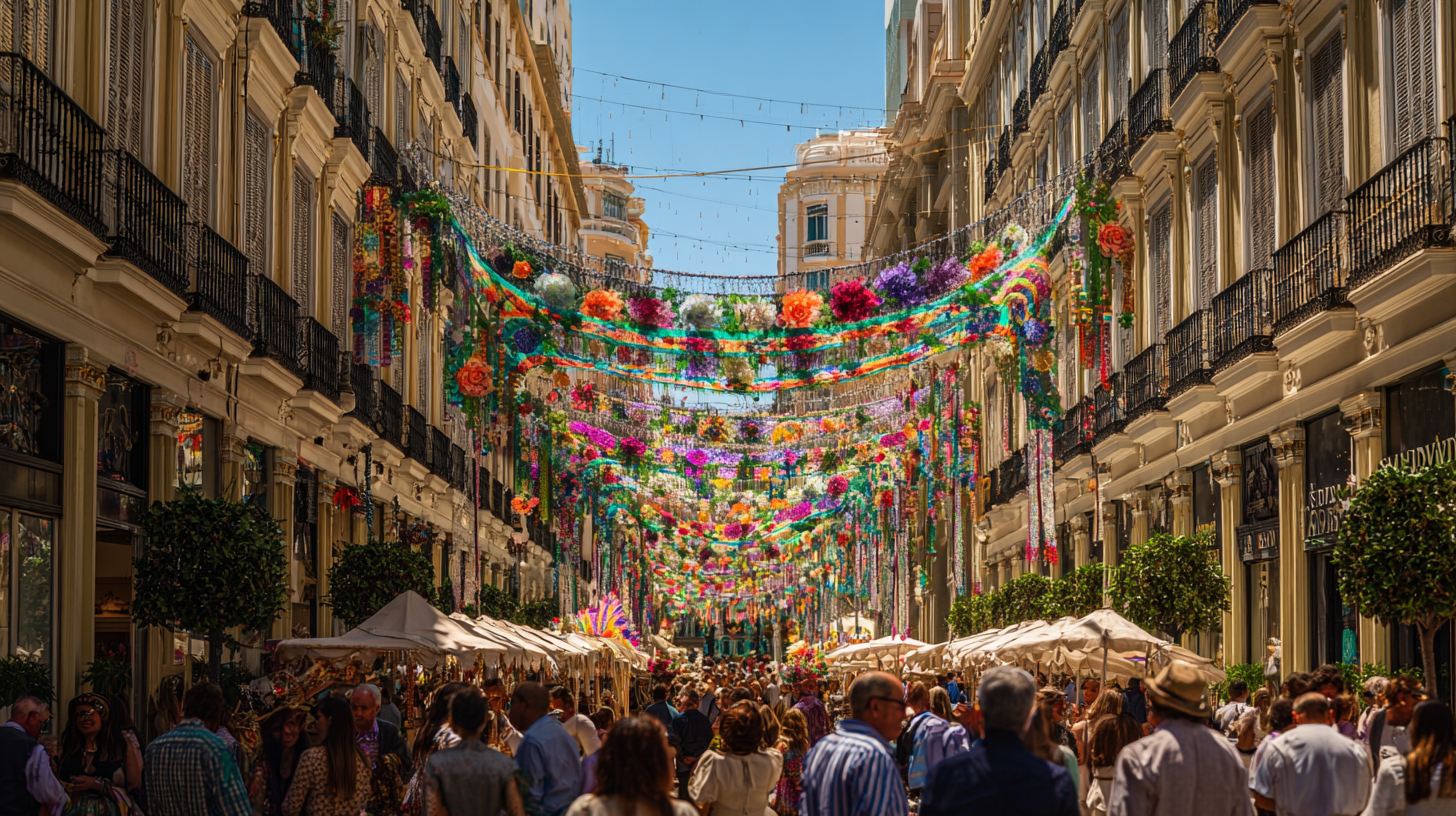
Larios Street and the historic center fill up with municipal booths, live music, and flamenco dresses starting in the early afternoon. This is the most family-friendly and accessible part of the festival: free admission, packed terraces, and an atmosphere you can enjoy without a set plan—coming and going as you please.
The night fair, at the fairgrounds
As the sun sets, the party moves to the fairgrounds, with hundreds of booths, rides, and concerts lasting until the early morning. The atmosphere changes: bigger crowds, more noise, more energy. This is the part that requires better planning: who you’re going with, how you’ll get back, and how late you’ll stay out.
How to get there from Teatinos or downtown: bus, bike, and taxi
If you're studying at the Teatinos campus, the good news is that you're better connected than you might think. The Universidad metro station, on lines L1 and L2, takes you to downtown in just over ten minutes, and from there, the fairgrounds are just a short bus or taxi ride away.
Some practical options:
- Subway: the most reliable option during trade shows, because it isn’t affected by traffic or road closures.
- Bus: Nighttime service is usually increased during the fair; it’s a good idea to check the EMT’s special schedule for those days, since routes and schedules differ from the rest of the year.
- Bike: The bike lane connecting Teatinos to downtown is a reasonable alternative if you're traveling during the day and aren't in a hurry, although it's not the best option for heading back in the early morning.
- Shared taxi or ride-hailing service: the most convenient option for the ride back, especially if you split the cost among several roommates. Keep in mind that demand skyrockets after 1 a.m.
No matter how you get there, have a Plan B figured out before you head out. Trying to find a ride at 4 a.m. with a dead cell phone battery is not a good way to end the night.
Heat, Hydration, and Safety: What You Learn on the First of August
Málaga in August is no joke, and the fair takes place almost entirely outdoors. Here are a few tips that make all the difference:
- Drink water between drinks, not just when you're already thirsty.
- Use sunscreen if you're going to the fair during the day: the afternoon sun on Calle Larios is intense.
- Choose comfortable shoes. Heels are great for photos, but not so great for standing for six hours.
- Agree on a specific, easily recognizable meeting spot with your group in case your cell phone loses service in a crowd.
- Keep an eye on your purse and pockets in the busiest areas of the venue: crowds make it easy to let your guard down.
- If you're coming back alone in the early morning, let someone at your residence know what time you'll be arriving.
None of this takes the fun out of the party. It just keeps a night at the fair from turning into the worst story of the school year.
If festival tents aren't your thing: alternative plans
You don't have to go to the fairgrounds every night to enjoy the Málaga Fair. Here are some other options that work just as well:
- Dinner on a terrace downtown, away from the hustle and bustle of the Real, enjoying the atmosphere without the crowds.
- A nighttime swim at Malagueta Beach, with the city's lights in the background.
- A day trip to Nerja or Ronda to get away from the noise and come back just in time for the nighttime festival.
- Staying at the residence with a small group, watching the hustle and bustle from outside and making your own quiet plans.
The fair doesn't force you to do anything. It forces you to decide which version of those days you want to experience.
The Fair and September: How to Balance the Festivities with Your Studies
If you have an exam during the September testing period, the fair comes at a bad time on the calendar and a good time of year—in equal measure. Here’s what usually works best:
- Study in the morning, when your body and the city are at their calmest, and save the afternoon and evening for the fair.
- Don't plan to “study when you get back from the booth”—that version of you almost never opens a book.
- Spread it out over the week: not every day of the festival has to be a night out at the venue. Alternating a night of partying with a night of studying helps you keep up the pace better than trying to do everything at once.
- Take advantage of the residence hall's common areas to study in groups before or after the party, without having to go home feeling empty and with no desire to open your notes.
It's not incompatible. It's just a matter of managing the days left until the exam well.

Experience the Málaga Fair from your StepHouse residence
Experience the Málaga Fair from a student residence in Málaga changes the whole experience: you can get to bed without worrying about catching the last bus, you have a place to rest up before the next night, and you have friends to make plans with without having to explain everything from scratch every time.
If you're also thinking about studying in the city next school year, this comprehensive guide to studying in Málaga covers everything that comes after the fair: universities, neighborhoods, transportation, and student life for the rest of the year.
Check for available spots and find out how far your future residence is from downtown and the Teatinos campus before the school year begins.
Frequently Asked Questions
When exactly is the Málaga Fair in 2026?
The official date is confirmed each year, but it always falls in mid-August. Check the Málaga City Council's program as soon as it's published to get the final schedule.
Is admission to the fair free during the day and at night?
Yes, admission to both the municipal booths in the city center and the fairgrounds is free. You only pay for food and drinks and certain attractions.
Is public transportation available all night during the fair?
Service has been increased, but it doesn't operate the same way as on a typical day. It's a good idea to check the special subway and bus schedules before heading out, especially if you're coming home in the early morning.
Is it possible to study in Málaga during the week of the fair?
Yes, although it requires better organization than the rest of the year. Mornings are usually the quietest time to get things done, leaving the afternoon and evening for partying.
What should I bring if I'm going to the fairgrounds at night?
Just the essentials: your ID, some cash, a fully charged cell phone, and comfortable shoes. The less you carry, the less you have to keep an eye on in the crowd.Malaga Fair
Related publications
Would you like to read more?

Request information
Take a step toward
your new adventure
your new adventure